Broward County, Florida
Commercial Waterproofing in Broward County
Find where the water gets in, then close the building envelope for good.
In short
Who handles commercial waterproofing in Broward?
Unified GCS installs commercial waterproofing in Broward County for condominium associations, hotels, office buildings and retail properties. The work involves tracing each leak to its entry point, repairing the concrete beneath, and installing the membrane, coating, sealant or expansion joint suited to that surface, from roof-level amenity decks and catwalks to planters, facades and elevator pits.
Waterproofing · Broward
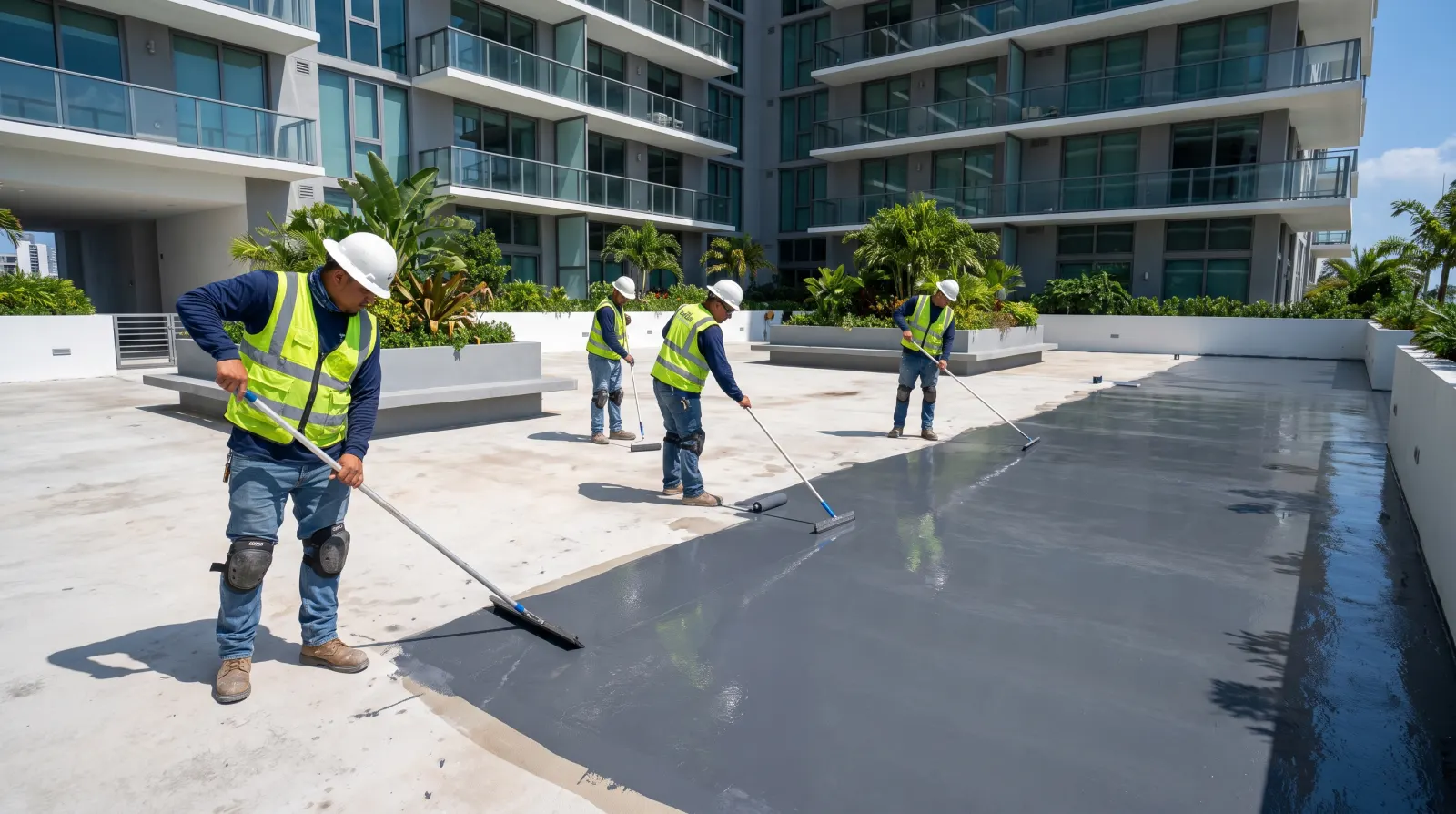
Commercial waterproofing in Broward County means keeping wind-driven rain, salt spray and groundwater out of concrete buildings that are exposed to all three. Unified GCS traces leaks to their entry point and installs the system that fits the surface: liquid-applied and sheet membranes on decks and planters, sealant and expansion joint replacement on facades, and below-grade waterproofing on walls and pits that sit in the water table.
Waterproofing is also the step that protects every concrete repair. A balcony or garage slab that has been rebuilt will corrode again if water is allowed back in through the same crack or joint. For that reason we treat leak investigation, concrete repair and the waterproofing system as one scope, and we match the membrane to how the surface is used, whether it carries foot traffic, vehicles, pavers or soil.
Written and reviewed by the Unified GCS project team, 45 years in concrete restoration and construction. Last reviewed October 2026.
Local conditions
Where water gets into buildings in Broward County
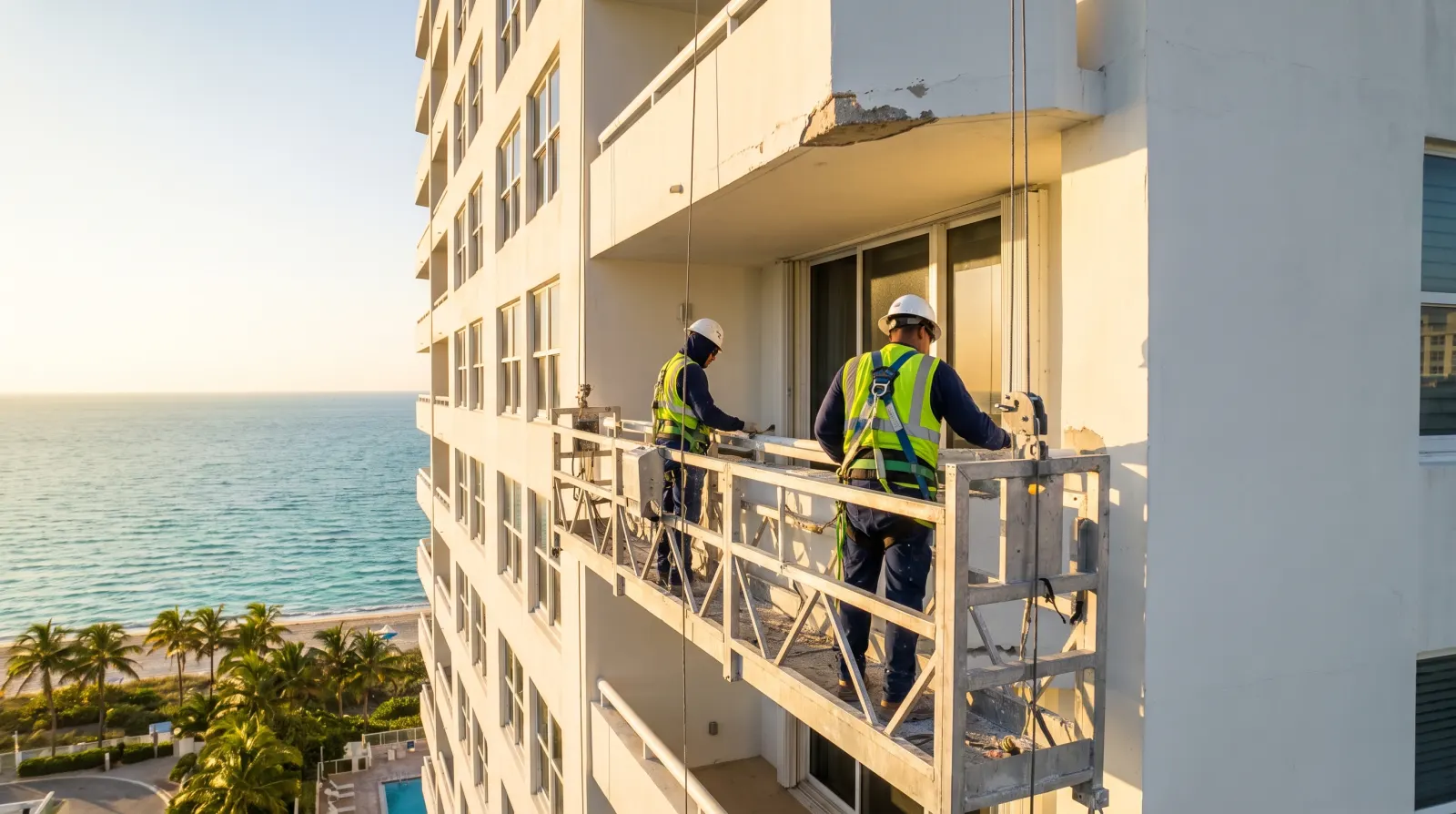
On oceanfront towers in Fort Lauderdale, Pompano Beach and Hollywood, the usual entry points are balcony slabs and thresholds, window and sliding door perimeters, facade cracks and the joints between dissimilar materials. Rain here often arrives sideways. A sealant joint that looks intact from the ground can be split or debonded on the weather side, and water that enters at one floor may show two floors down.
Away from the beach, properties along the Intracoastal and the canal system in Fort Lauderdale and Dania Beach deal with a high water table. Elevator pits, below-grade garages and the bases of perimeter walls can take in water from below, especially during the seasonal high tides. Amenity decks with planters and pools over occupied space or parking are the other common source of long-running leaks.
Where this work is needed
Broward property types and the leaks each one has
Newer apartment and mixed-use mid-rises in downtown Fort Lauderdale and along Federal Highway usually have a pool and amenity deck built over the garage or over retail space. Leaks on these Broward buildings tend to appear at drains, planter walls, door thresholds and the joint where the deck meets the tower. Office buildings in Plantation and the Cypress Creek corridor more often leak at window perimeters, panel joints and rooftop equipment curbs, where sealant has aged and hardened in the strong sun.
Inland Broward condominium communities with open catwalks have a waterproofing problem of their own. Walkway slabs in Tamarac, Sunrise, Lauderhill and Margate were often left as painted concrete, so rain soaks in at cracks and at the base of railing posts and drips onto the walkway below. Hotels on Fort Lauderdale beach and Hollywood beach deal with showers, kitchens and pool decks above occupied rooms. Retail centers along University Drive and State Road 7 see leaks at canopies, parapets and storefront heads.
What is included
Commercial waterproofing in Broward County: scope of work
- 01Leak investigation and water testing
- 02Liquid-applied and sheet membrane systems
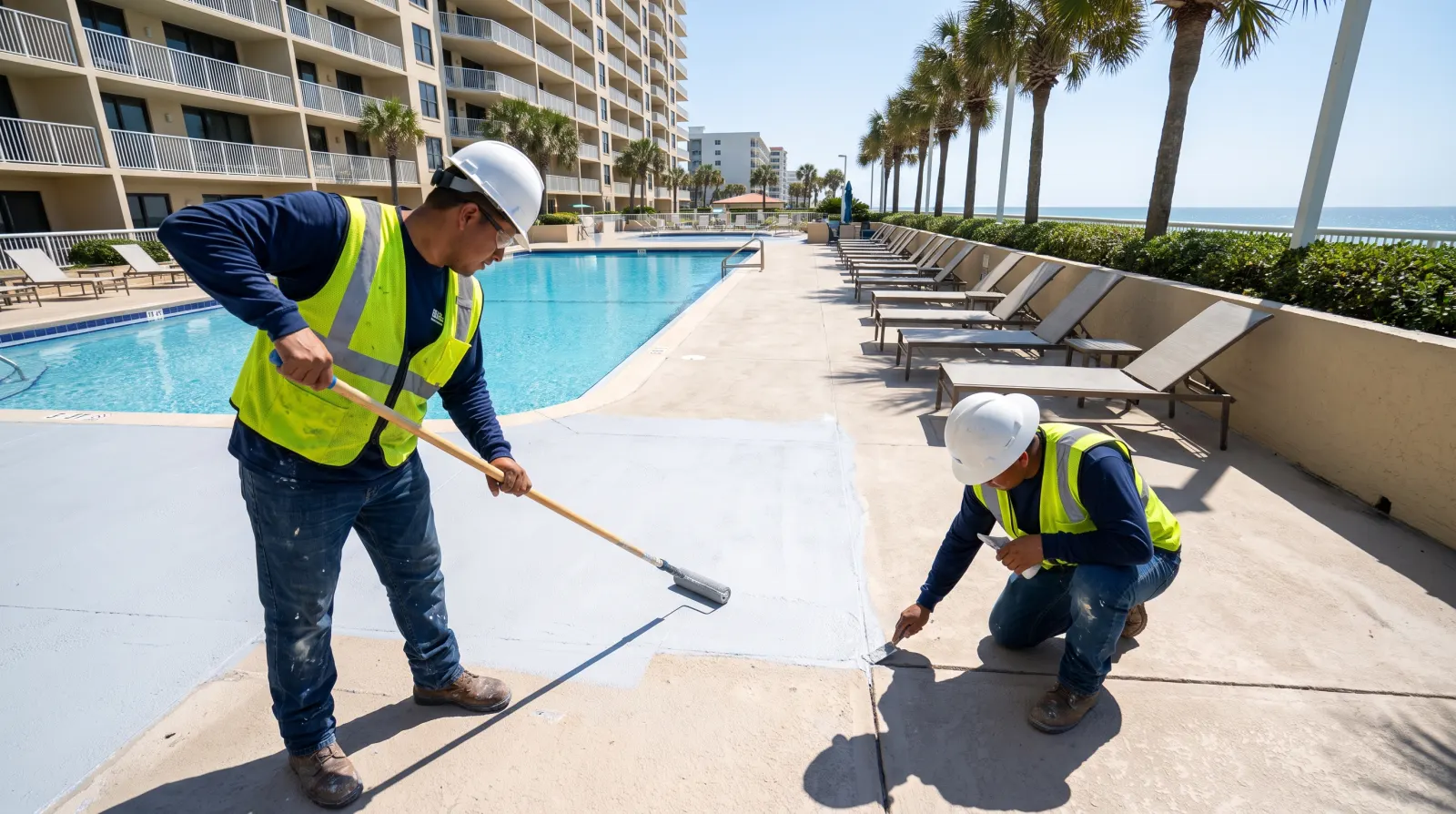
- 03Balcony, plaza and pool deck waterproofing
- 04Planter and below-grade waterproofing
- 05Sealant and expansion joint replacement
- 06Window and door perimeter sealing
Our approach
Finding and fixing leaks without emptying the building
We begin with the leak history from management and residents, then survey the suspect area and test it with controlled water application, working upward from the lowest possible entry point. Moisture readings and, where useful, removal of a small section of finish confirm the path. Only then do we recommend a repair, so the association is not paying for a full recoat to solve a failed joint.
Installation is phased so units and common areas stay in use. Sealant replacement and facade work are done from swing stages by elevation. Deck membranes are installed in sections with temporary protection at the edges if rain arrives before a section is complete. Each system is installed to the manufacturer's requirements for surface preparation, thickness and cure, and flood tested where the detail calls for it.
Unified GCS has 45 years in the business. See the full waterproofing service or everything we do in Broward County.
Planning the project
Scoping and scheduling waterproofing work in Broward
Waterproofing in Broward should be scoped from a diagnosis, not from a guess. Where a leak affects structural concrete, the owner's engineer specifies the concrete repair and the system that goes over it, and the city building department permits that work. For a membrane replacement on its own, the building official confirms what permit applies. Boards should ask which manufacturer's system is proposed, what surface preparation and thickness it requires, and whether the manufacturer inspects the installation before issuing its warranty.
Timing matters because membranes and sealants must go onto dry surfaces. The rainy season in South Florida runs from mid-May to mid-October, so exposed decks and catwalks in Broward are easier to waterproof between late fall and spring, while covered and below-grade work can proceed year-round. Florida's structural integrity reserve study, required at least every 10 years for condominium buildings of three or more habitable stories, lists waterproofing among the components it must cover, which gives boards a basis for funding renewal on a cycle.
How a project runs
From the first site walk to the closed permit.
- 01
Walk the property
We start on site with your manager, board or engineer and look at the conditions first-hand.
- 02
Define the scope
You get a written scope tied to the engineer's report or our findings, with the phasing spelled out.
- 03
Plan access and safety
Swing stages, shoring, barricades, parking and resident notices are set before the first cut.
- 04
Do the work
Our crews carry out the repairs in sequence, with inspections at the points the engineer requires.
- 05
Close it out
Final inspections, permit closure and a record of what was done, for the association's files.
Cities served
Waterproofing across Broward County
Summary
Key takeaways for Broward owners and boards
- 01
Amenity decks over garages on downtown Fort Lauderdale mid-rises most often leak at drains, planter walls and door thresholds.
- 02
Painted, uncoated catwalks on inland Broward condominiums let rain into the slab at cracks and railing post bases.
- 03
Exposed decks in Broward are best waterproofed between late fall and spring, outside the mid-May to mid-October rainy season.
- 04
Florida's structural integrity reserve study lists waterproofing as a component, so Broward boards can plan its renewal on a cycle.
Questions
Waterproofing in Broward: common questions
Why does our Fort Lauderdale building leak only during storms?
Wind-driven rain reaches places normal rain does not: the undersides of sills, the tops of sliding door tracks, and cracks on walls that are usually sheltered. Leaks that appear only with wind from one direction point to the facade, window perimeters or balcony thresholds on that elevation rather than the roof.
What is the white powder on concrete in our Broward County garage?
It is efflorescence. Water moving through the concrete dissolves salts and leaves them on the surface as it evaporates. The powder is harmless, but it shows that water is travelling through the slab or wall. The source above or behind that location should be found and waterproofed before the steel is affected.
Can planters over a garage in Hollywood be waterproofed without removing them?
Rarely with lasting results. The membrane sits under the soil, drainage layer and often the planter walls. A dependable repair means removing the soil and plants, repairing the concrete, installing a new root-resistant membrane with proper drainage and then replanting. We sequence this with the landscape work.
Should catwalks on a Tamarac or Sunrise condominium be waterproofed?
A catwalk left as bare or painted concrete absorbs water at every crack. Once the slab edges and post bases have been repaired, a pedestrian deck coating with a slip-resistant finish keeps rain out of the concrete and gives a uniform walking surface. The coating is applied in sections so residents can still reach their doors.
Does waterproofing work in Broward County require a permit?
It depends on the scope and the city. Waterproofing that is part of a structural repair is covered by that permit and the engineer's documents. For standalone commercial waterproofing in Broward County, the building official for the city where the property sits confirms whether a permit applies. We check before work starts and handle the application when one is needed.
How is a new deck membrane tested on a Fort Lauderdale amenity deck?
Where the detail allows, the finished membrane is flood tested: drains are plugged, the area is filled with a shallow depth of water for a set period, and the space below is checked for leaks. Testing is done before pavers, planters or topping go back, because a leak found afterward means removing those finishes again.
Regulations referenced
- Broward County Board of Rules and Appeals Policy 05-05: Building Safety Inspection Program
- Florida Statute 553.899: mandatory structural inspections for condominium and cooperative buildings
- Florida Statute 718.112: structural integrity reserve studies
This page is general information, not legal or engineering advice. Inspections are performed by licensed engineers and architects, and your building official sets the dates that apply to your property. Unified GCS is the contractor that carries out the repairs.
Referred by an engineer?
Have drawings, specifications or a full set of bid documents?
Most of our restoration, pool and roofing work comes to us through structural engineers, property engineers and board members. When the scope is already drawn and specified, we price exactly what is on the documents, flag anything that needs a question, and show every line so the board can compare bids fairly.
Request an estimate
Let's look at your building.
Send us the engineer's report, a few photos or a short description. We will schedule a site visit and follow up with a written scope.
- 45 years in the business
- Broward and Palm Beach counties
- Reply within one business day
Prefer to talk?(561) 678-4182
We reply within one business day. Your details are only used to respond to this request.