Structural repair in Fort Lauderdale usually starts where an engineer has marked delaminated concrete on a balcony, column or beam. Crews shore the area where the drawings require it, chip back to sound material, clean the reinforcing steel or splice in new bars, and place repair mortar matched to the specification. High-rise work on the beach is done from swing stages, with debris controlled above pools, walkways and neighboring property.
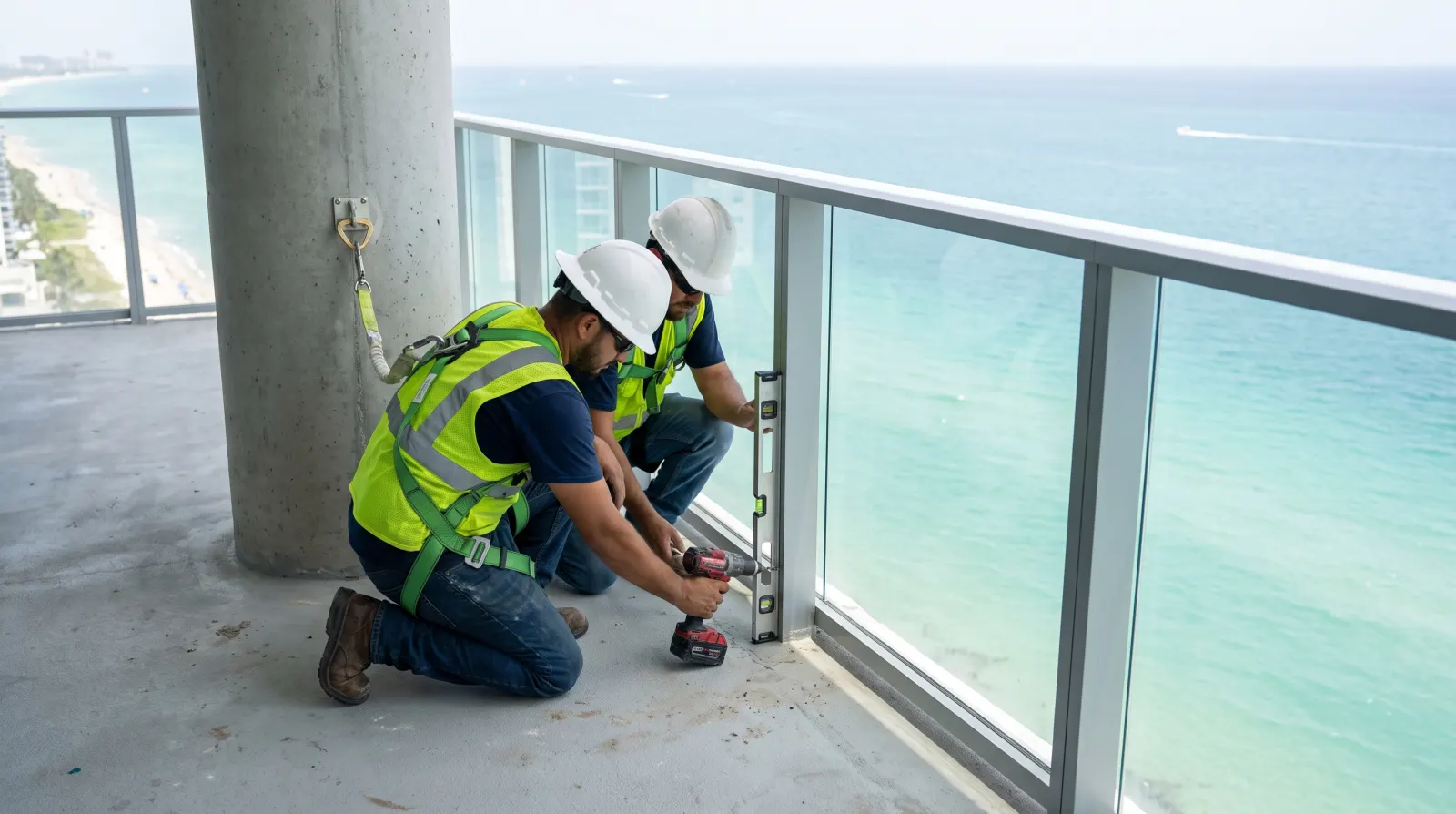
Balconies on Fort Lauderdale oceanfront towers take more salt than any other part of the building. Typical scope covers slab edges, the underside of the balcony above, and the pockets where railing posts were set into the slab. After the concrete is rebuilt, the surface is sloped to drain, waterproofed and finished, and new railings are anchored to current code.
Downtown and beachside garages in Fort Lauderdale carry cars, rainwater and whatever the tires bring in. Garage repair addresses spalled slabs and beams, leaking expansion joints, deteriorated double-tee connections and worn traffic coatings. The work is phased level by level or bay by bay so residents and tenants keep parking. Plaza and pool decks over garages are repaired from above and below.
Many Fort Lauderdale associations call after the engineer's Building Safety Inspection report lists required structural repairs. Unified GCS scopes and schedules the work from that report, pulls the permit, coordinates inspections with the engineer and the city, and carries the job through to a closed permit. Boards get a sequence they can present to owners: mobilization, repair by elevation or stack, waterproofing, and final sign-off by the engineer of record.
Water enters Fort Lauderdale buildings through balcony surfaces, window perimeters, planters, roof-to-wall transitions and below-grade walls beside canals. Waterproofing work begins with finding the path, often by flood testing or tracing stains back from the ceiling below. The fix may be a pedestrian membrane, new sealant joints, crack injection or a full deck system. Structural repair without waterproofing tends to fail again.
Roofs on the Galt Ocean Mile and in Harbor Beach carry cooling towers, elevator penthouses and window-washing davits, and most leaks start at those curbs and at the parapet coping. Unified GCS reroofs to the consultant's bid package with systems approved for the High-Velocity Hurricane Zone, usually under a Miami-Dade Notice of Acceptance. Downtown office towers get the same sequence, with deck spalls repaired before insulation goes down.