Broward County, Florida
Concrete Restoration in Broward County
Spalling, cracking and corroded rebar, repaired to the engineer's specification.
In short
Who handles concrete restoration in Broward?
Unified GCS is a contractor with 45 years in the business that carries out concrete restoration in Broward County for condominium associations, hotels and commercial owners. The work involves sounding the structure, removing spalled concrete, cleaning or replacing corroded reinforcing steel and rebuilding slabs, beams and columns to the repair details issued by the owner's licensed engineer.
Concrete Restoration · Broward
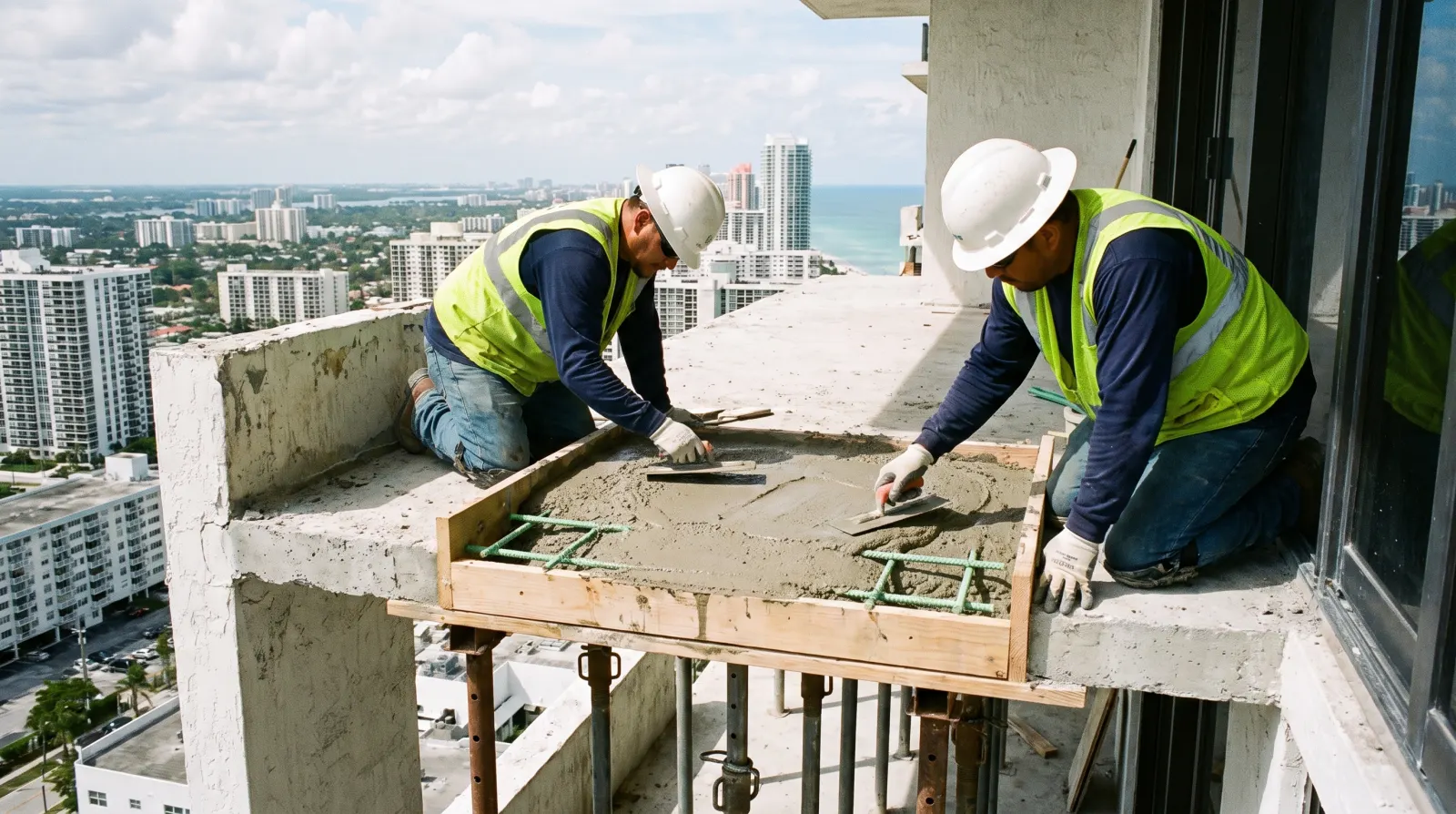
Concrete restoration in Broward County is mostly the repair of reinforced concrete that salt has reached. Chlorides from ocean air migrate through the concrete to the reinforcing steel, the steel corrodes and expands, and the concrete over it cracks, delaminates and spalls. Unified GCS removes the damaged concrete, cleans or replaces the steel, treats it against further corrosion and rebuilds the section with repair mortar or a form-and-pour mix, following the repair details issued by the owner's engineer.
We carry out this work on slabs, beams, columns, shear walls, balcony edges and stair towers at condominium buildings, hotels, parking structures and commercial properties. Repairs range from isolated patches found during a paint project to full-building programs that follow an inspection report. In both cases the method is the same: find the limit of sound concrete, expose the steel fully, restore the section and protect it so the same location does not fail again.
Written and reviewed by the Unified GCS project team, 45 years in concrete restoration and construction. Last reviewed October 2026.
Local conditions
Why concrete fails early along the Broward County coast
Fort Lauderdale, Pompano Beach, Hollywood and Hallandale Beach have some of the oldest concentrations of oceanfront high-rises in Florida. Many of the towers on the Galt Ocean Mile and the Hollywood and Hallandale Beach oceanfront date from the 1960s and 1970s, when concrete cover over the steel was thinner and mixes were more permeable than what is specified today. Decades of salt exposure on the ocean side and humid air off the Intracoastal on the other have pushed chlorides deep into those structures.
The county's Building Safety Inspection Program brings this to the surface on a schedule. Buildings are inspected structurally and electrically at 25 years and every 10 years after, and the engineer's report lists the repairs needed. For a building on its second or third cycle, that often means removing earlier patches that have debonded, along with newly corroded areas beside them. Repairing only the visible spall leaves active corrosion at the edge of the patch.
Where this work is needed
Which Broward buildings need structural concrete repair
Oceanfront buildings along A1A, from the Hillsboro Mile south through Pompano Beach, Fort Lauderdale, Hollywood and Hallandale Beach, account for the heaviest concrete repair in Broward. Typical findings on these towers are spalled columns in open ground-level parking, corroded slab edges on the east face, cracked stair tower landings and deteriorated roof slabs under mechanical equipment. Mid-rise buildings on the Intracoastal Waterway show the same damage on the side facing the water, usually at pool decks, seawall-side columns and exposed beams.
Inland Broward has a second group of buildings that need concrete repair: the three- and four-story 55-plus communities of Tamarac, Lauderhill, Margate, Sunrise, Pembroke Pines and Deerfield Beach. Residents reach their units by open catwalks and exterior stairs, and decades of rainwater ponding on those flat walkways has corroded the steel at walkway edges, stair landings and column bases. Salt plays a smaller part west of I-95, but the walkways are the only way in and out, so repairs there have to be phased around daily foot traffic.
What is included
Concrete restoration in Broward County: scope of work
- 01Spall and delamination repair on slabs, beams, columns and walls
- 02Rebar cleaning, coating, splicing and replacement
- 03Structural crack repair and epoxy injection
- 04Form-and-pour, hand-applied and overhead repair mortars
- 05Shoring and temporary support during repairs
- 06Corrosion inhibitors, sealers and protective coatings
Our approach
How we repair concrete on occupied Broward buildings
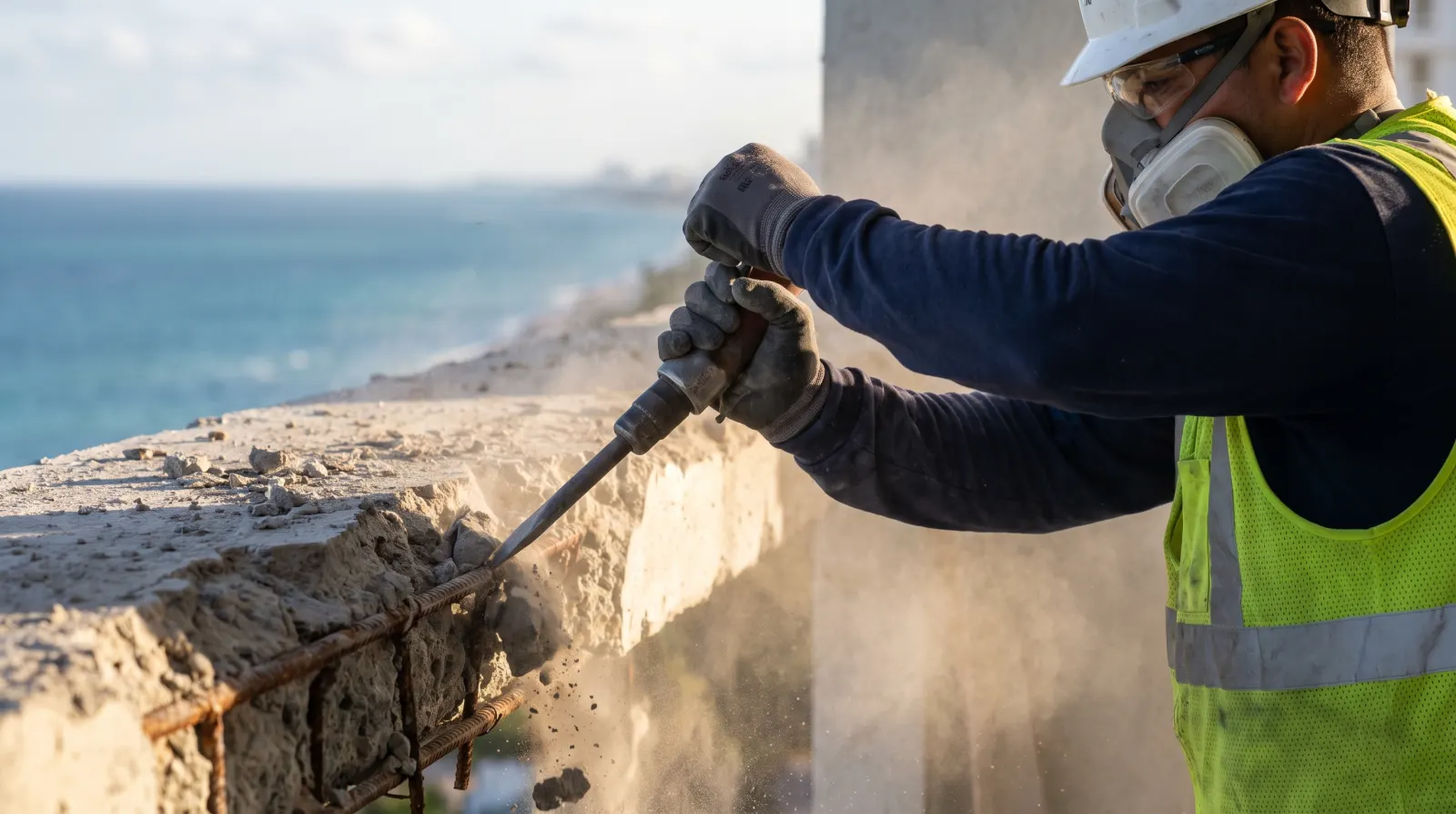
Work starts with sounding. Our crews tap and mark every delaminated area so the engineer can confirm quantities before demolition begins. Chipping is done with light pneumatic hammers to avoid damaging sound concrete, and the steel is exposed around its full circumference. Where section loss is beyond what the engineer allows, new bars are spliced in. Shoring goes in first wherever a slab, beam or column is being opened.
On a tower with residents at home, we phase the work by stack or elevation, protect the walkways and entrances below, and control dust and slurry at each drop. Noisy work is kept within the hours the association and the city allow. The engineer inspects exposed steel before each pour, and we keep a photo and quantity record of every repair location for the association's files and the permit closeout.
Unified GCS has 45 years in the business. See the full concrete restoration service or everything we do in Broward County.
Planning the project
Planning a concrete repair project with a Broward board
A concrete repair project in Broward starts with the engineer's report and signed and sealed repair documents, which the city building department needs before it will issue a permit. Repair quantities in that report are estimates, because delaminated concrete hidden under paint or tile only shows once sounding and chipping begin. Boards should expect the engineer to measure and approve actual quantities as the work proceeds, and should hold a contingency in the reserve plan for areas that turn out larger than the survey suggested.
Weather shapes the calendar for concrete work in Broward. The South Florida rainy season runs from mid-May to mid-October and brings near-daily afternoon storms that interrupt pours and delay curing, and hurricane season runs from June 1 to November 30. Swing stages, scaffolding and loose materials have to be lowered and secured when a storm threatens, which stops production for several days each time. Many associations also prefer the loudest chipping to happen in summer, when seasonal residents are away, so the schedule is a trade between noise and rain.
How a project runs
From the first site walk to the closed permit.
- 01
Walk the property
We start on site with your manager, board or engineer and look at the conditions first-hand.
- 02
Define the scope
You get a written scope tied to the engineer's report or our findings, with the phasing spelled out.
- 03
Plan access and safety
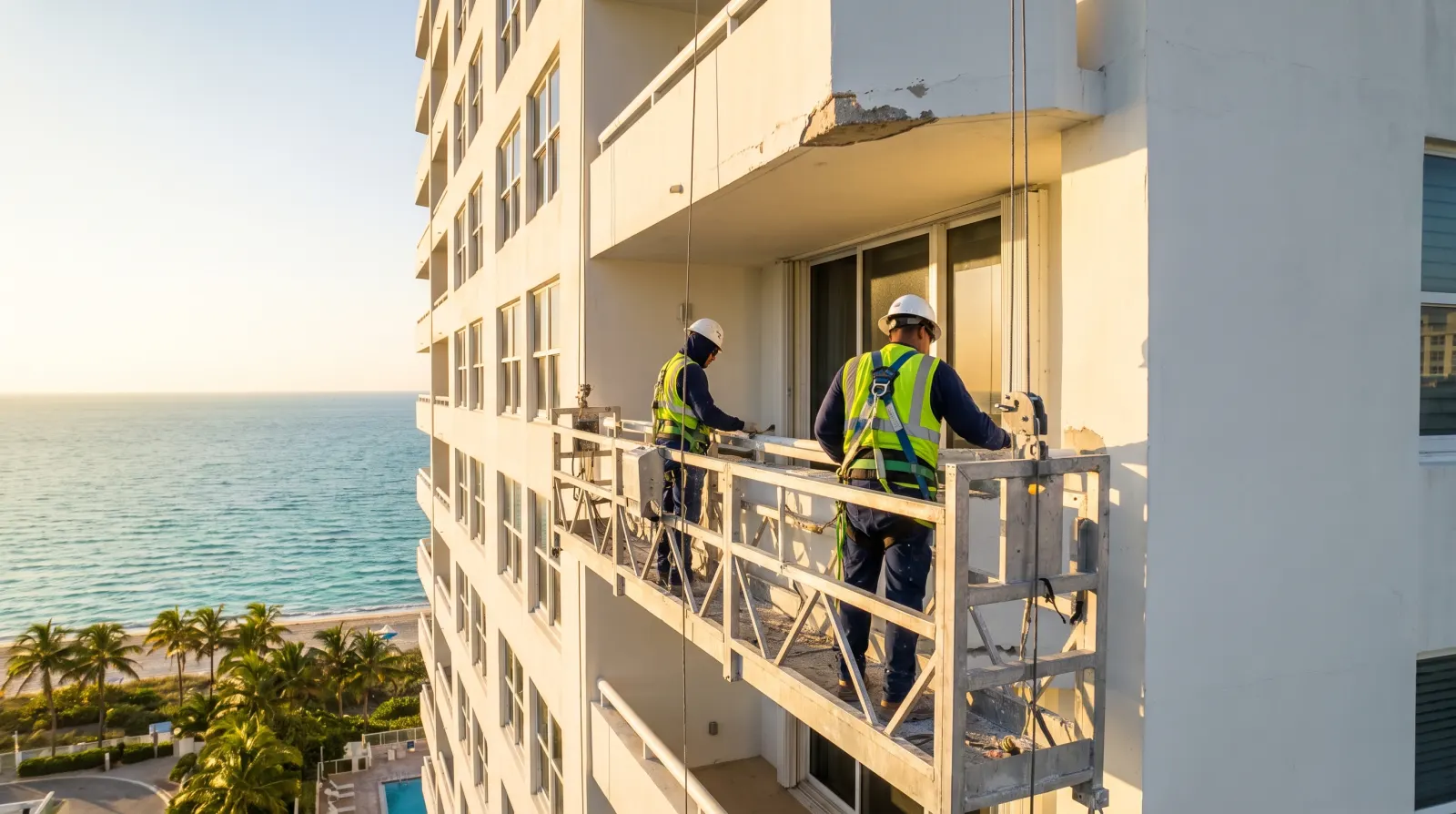
Swing stages, shoring, barricades, parking and resident notices are set before the first cut.
- 04
Do the work
Our crews carry out the repairs in sequence, with inspections at the points the engineer requires.
- 05
Close it out
Final inspections, permit closure and a record of what was done, for the association's files.
Cities served
Concrete Restoration across Broward County
Summary
Key takeaways for Broward owners and boards
- 01
Oceanfront towers along A1A carry the heaviest concrete damage in Broward, usually at parking-level columns, east-facing slab edges and stair towers.
- 02
Inland 55-plus communities in Tamarac, Lauderhill and Margate most often need repairs to catwalks, stair landings and column bases.
- 03
Each Broward city building department issues the repair permit from the engineer's signed and sealed documents.
- 04
Repair quantities on a Broward building are confirmed by the engineer during the work, so boards should plan a contingency.
Questions
Concrete Restoration in Broward: common questions
How do we know if our Fort Lauderdale building needs concrete restoration?
Rust stains bleeding through paint, cracks that run in straight lines along the rebar, loose or fallen concrete and a hollow sound when a surface is tapped are the usual signs. A licensed engineer determines the extent and writes the repair specification. If you already have a report, send it to us and we will walk the building with you.
Are concrete repairs in Broward County done under a permit?
Structural concrete repairs are permitted through the building department of the city where the property sits, using signed and sealed repair documents from the engineer. We handle the permit application, schedule the required inspections and coordinate the engineer's own site inspections at each stage of the work.
Why do old concrete patches fail on Hollywood and Hallandale Beach towers?
A patch fails when corroded steel was not fully exposed and cleaned, when the repair material did not bond, or when chloride-contaminated concrete was left next to it. The new patch and the old concrete then form a corrosion cell at the edge. Proper preparation, corrosion treatment and waterproofing over the repair are what prevent it.
Can residents stay in a Pompano Beach condominium while concrete repairs are under way?
In most cases, yes. The engineer decides whether the building can remain occupied and may put that in writing for the building official. Work is phased by stack or elevation, shoring carries the structure where concrete is opened, and entrances, walkways and parking below each drop stay protected. Residents lose use of the area under repair, not the building.
How are additional repair quantities handled on a Broward County concrete project?
Sounding at the start of each phase marks the real extent of damage. The engineer reviews the marked areas, measures them and approves the quantity before chipping goes further. On concrete restoration in Broward County we record every location with photos and measurements so the board can see exactly what was added, where and on whose instruction.
Do buildings west of I-95 in Broward County get concrete damage without ocean salt?
Yes, more slowly. Rainwater that ponds on flat catwalks, balconies and stair landings soaks into the slab, and over decades the concrete loses the alkalinity that protects the reinforcing steel. Cracks let water reach the bars directly. Inland communities in Sunrise, Tamarac and Pembroke Pines see this most at walkway edges and column bases.
Regulations referenced
- Broward County Board of Rules and Appeals Policy 05-05: Building Safety Inspection Program
- Florida Statute 553.899: mandatory structural inspections for condominium and cooperative buildings
- Florida Statute 718.112: structural integrity reserve studies
This page is general information, not legal or engineering advice. Inspections are performed by licensed engineers and architects, and your building official sets the dates that apply to your property. Unified GCS is the contractor that carries out the repairs.
Referred by an engineer?
Have drawings, specifications or a full set of bid documents?
Most of our restoration, pool and roofing work comes to us through structural engineers, property engineers and board members. When the scope is already drawn and specified, we price exactly what is on the documents, flag anything that needs a question, and show every line so the board can compare bids fairly.
Request an estimate
Let's look at your building.
Send us the engineer's report, a few photos or a short description. We will schedule a site visit and follow up with a written scope.
- 45 years in the business
- Broward and Palm Beach counties
- Reply within one business day
Prefer to talk?(561) 678-4182
We reply within one business day. Your details are only used to respond to this request.