General Contracting
General Contracting & Project Management
One contractor accountable for the schedule, the trades and the finished building.
In short
What is general contracting?
General contracting is the management of a construction or restoration project under one contract, with a single company responsible for permits, schedule, safety, subcontracted trades and the quality of the finished work. A building needs it when a project involves several trades, a permit and an engineer or architect, or when the owner has no one in-house to coordinate them.
General Contracting
Restoration projects touch concrete, waterproofing, paint, railings, roofing, glazing and more. We manage the whole job as general contractor, so the association has one contract, one schedule and one team to call.
Unified GCS has spent 45 years in this business. We carry out general contracting projects across Broward and Palm Beach counties for condominium associations, property managers, commercial owners and industrial operators.
Written and reviewed by the Unified GCS project team, 45 years in concrete restoration and construction. Last reviewed October 2026.
Why it happens
Why building projects need one accountable contractor
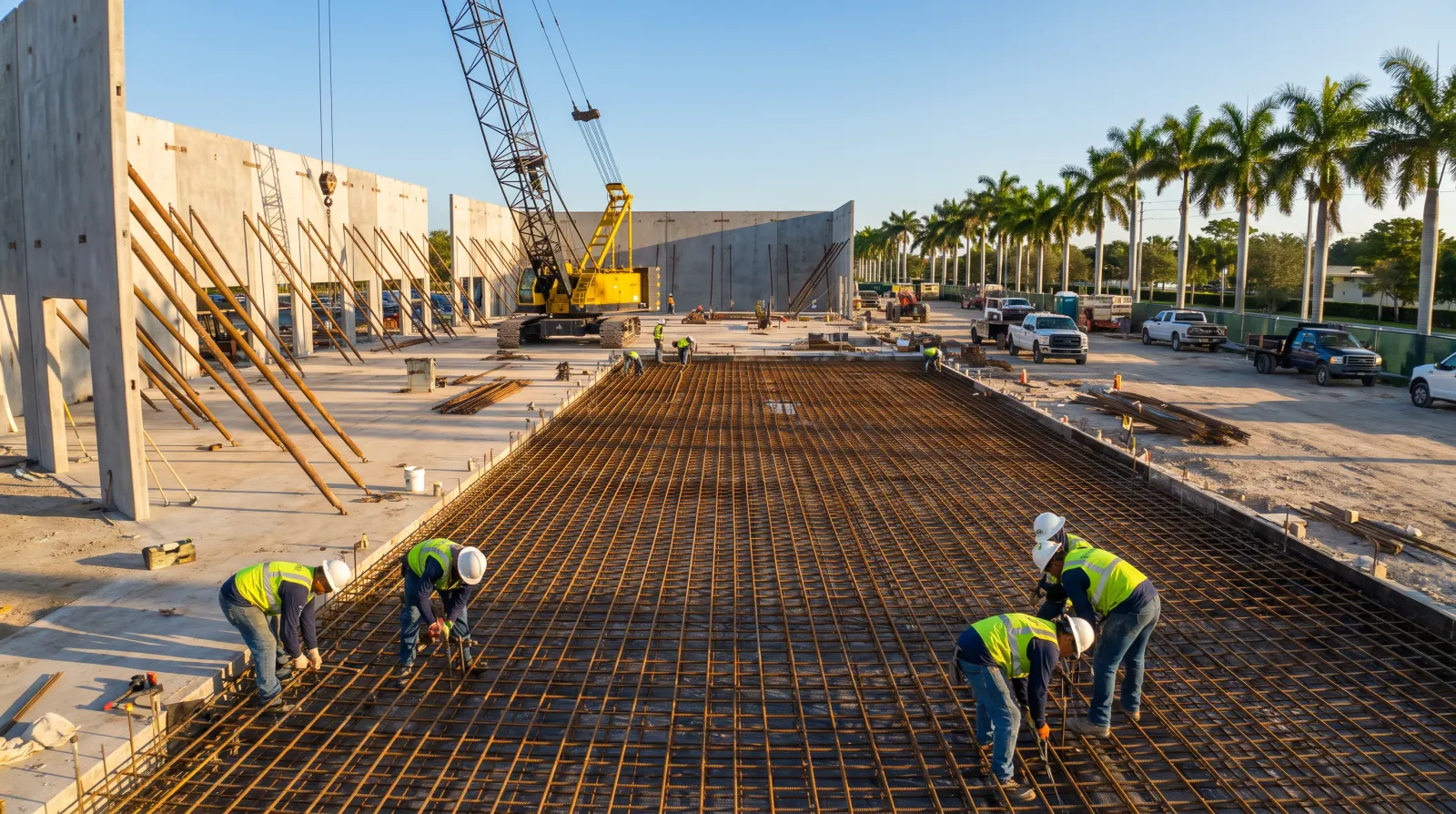
A building repair project is a chain of dependent steps. Concrete has to be repaired and cured before a membrane goes over it. The membrane has to be finished before railings are anchored through it and sealed. Stucco patches need to cure before coating, and windows have to be set before the perimeter is sealed and painted. When separate contractors each hold a piece, the gaps between scopes are where leaks, delays and disputes come from.
South Florida adds its own constraints. Buildings stay occupied during the work, so access, noise, dust and parking have to be managed daily. Permits involve the building department and the engineer of record, each with their own inspections. Hurricane season means swing stages, materials and open work must be secured on short notice. Someone has to own the whole schedule, hold every trade to it and answer to the board or owner when conditions change.
What is included
General Contracting: scope of work
- 01Commercial general construction and build-outs
- 02Building renovation and capital improvement projects
- 03Roofing and roof repair coordination
- 04Permitting, scheduling and trade coordination
- 05Site assessment, consultation and budgeting support
- 06Ongoing maintenance programs for buildings and communities
How we do it
How a project is planned, run and closed out
Planning starts with the documents: drawings, specifications and the engineer's report are reviewed for gaps and conflicts before the schedule is built. Scopes are written for each trade so that responsibility at every interface is clear, such as who seals the railing anchors or who patches stucco at a new window. Submittals, the product data and shop drawings the engineer must approve, are tracked so that materials with long lead times are ordered early.
Before work begins we set up the site: staging and storage areas, access equipment, overhead protection, signage and a notice schedule for residents or tenants. The permit is obtained and the inspection sequence is mapped against the schedule. Work is then phased so each trade follows the last without waiting or overlapping, and a short look-ahead schedule is updated regularly. Questions that arise in the field are put to the engineer in writing, and the answers are recorded.
During the work, quality is checked at the points where it cannot be checked later: steel before it is covered, membranes before they are tiled over, anchors before they are sealed. Site safety and housekeeping are reviewed daily, and the board or owner receives regular progress reports. Closeout includes a punch list walked with the owner and engineer, final inspections, permit closure, and a package of warranties, product data and records for the property files.
Materials and systems
Contract forms, schedules and access equipment: the tools of a general contractor
A general contractor's tools are documents and systems more than products. The contract form sets how the work is defined: a lump sum for a fully designed scope, unit quantities where hidden conditions make the extent uncertain, or a construction management arrangement in which the contractor joins during design. Restoration projects often mix the first two. The schedule is usually built by the critical path method, which links each activity to those it depends on and shows which delays affect the finish date.
Equipment and trade selection follow from the building. Access may be by swing stage, mast climber, scaffold or boom lift, and the choice affects productivity, resident disruption and how quickly the site can be secured before a storm. Subcontractors are selected for the specific systems specified, since many membrane, coating and glazing manufacturers require approved installers. Logs for submittals, requests for information and inspections keep decisions traceable. Where a choice depends on design intent, the engineer's or architect's specification and the manufacturer data sheets govern.
What makes it last
What separates a well-run project from a troubled one
Projects go wrong at the handoffs. A membrane installer who arrives before the concrete patches have cured, a railing crew drilling through finished deck coating, or a painter sealing joints the glazier was meant to seal are coordination failures, not workmanship failures. A capable general contractor prevents them with pre-installation meetings for each trade, mock-ups approved before production work, and inspections at each handoff. Daily reports, dated photographs and a current schedule let the owner see whether the plan is being followed.
When comparing general contracting proposals, look past the total to what is included: permits, access equipment, protection of occupied areas, testing, supervision and cleanup. Ask who the full-time superintendent will be, which trades are self-performed and which are subcontracted, how changes are documented and approved, and how often the owner will receive reports. Confirm licensing and insurance directly with the issuing sources. At closeout, expect permit closure, as-built records, maintenance instructions and the manufacturers' warranty documents gathered into one package.
How a project runs
Planned around the people who use the building.
- 01
Walk the property
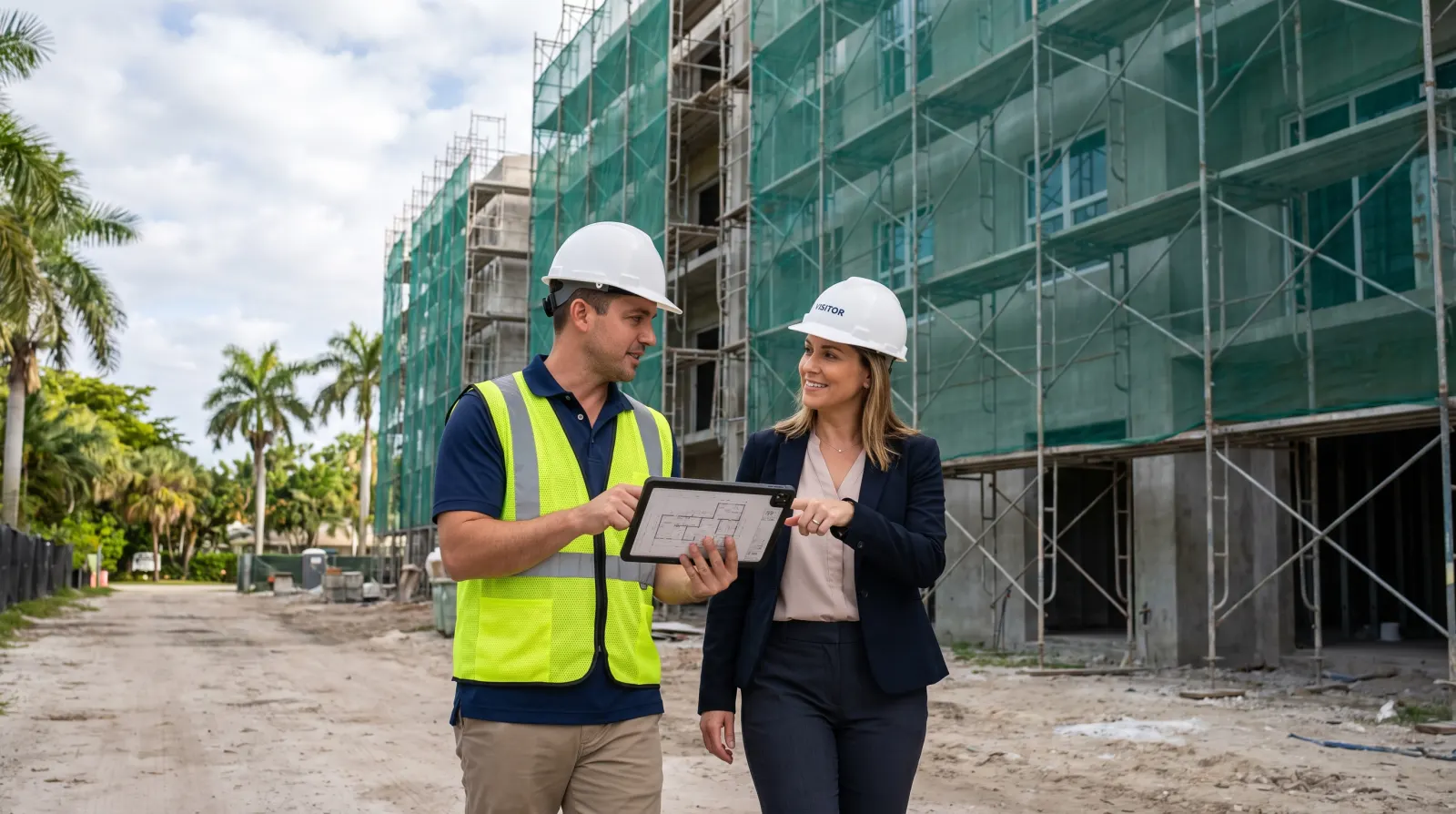
We start on site with your manager, board or engineer and look at the conditions first-hand.
- 02
Define the scope
You get a written scope tied to the engineer's report or our findings, with the phasing spelled out.
- 03
Plan access and safety
Swing stages, shoring, barricades, parking and resident notices are set before the first cut.
- 04
Do the work
Our crews carry out the repairs in sequence, with inspections at the points the engineer requires.
- 05
Close it out
Final inspections, permit closure and a record of what was done, for the association's files.
Where we do it
General Contracting by county
Summary
General Contracting: key takeaways
- 01
A general contractor holds one contract and is accountable for the permit, schedule, safety and every trade on the project.
- 02
Most construction defects and delays arise where one trade hands off to the next, which is where coordination matters most.
- 03
Mock-ups and pre-installation meetings settle methods and appearance before production work begins.
- 04
A complete closeout package includes permit closure, as-built records, maintenance instructions and manufacturer warranty documents.
Glossary
Terms you will see in the engineer's report
- Critical path
- The longest chain of dependent activities in a project schedule. A delay to any activity on it delays the completion date.
- Request for information
- A written question from the contractor to the engineer or architect about the drawings or a field condition. The written answer becomes part of the project record.
- Change order
- A signed amendment to a construction contract that records an agreed change in scope, time or both, issued before the changed work is carried out.
- Punch list
- A list of incomplete or defective items prepared near the end of a project, which the contractor corrects before final acceptance by the owner.
- Mock-up
- A sample section of work, such as one repaired balcony or one coated wall area, built first so that methods, appearance and quality can be approved.
Questions
General Contracting: common questions
Do you handle permits?
Yes. Permitting and building department inspections are part of how we run a project, along with scheduling, trade coordination and regular updates to the board or owner.
What is a submittal and why does it matter?
A submittal is the product data, sample or shop drawing a contractor sends to the engineer or architect for review before ordering or installing something. It confirms that the material proposed is the one specified, or an accepted equal. Skipping it risks installing a product the engineer later rejects, which means removal and delay.
How is a project protected when a hurricane approaches?
A hurricane plan is set before the season. When a storm threatens, swing stages are lowered and secured, loose materials and debris are removed or tied down, open repairs and unfinished openings are closed up as far as possible, and equipment is anchored. Work resumes after the site has been inspected for damage.
What is the difference between a general contractor and an owner's representative?
A general contractor holds the construction contract, hires the trades and is responsible for building the work. An owner's representative, or a construction manager acting as an adviser, works for the owner, reviews proposals and monitors progress, but does not build anything. Larger associations sometimes use both. The engineer of record remains separate from each and is responsible for the design.
How are residents kept informed during a long project?
Communication is planned like any other part of the job. A schedule of upcoming work is posted or sent regularly through the manager, notices go out before balconies, parking areas or entrances are affected, and a single contact handles questions. Regular meetings with the board and engineer review progress, upcoming phases and any conditions discovered since the last report.
Can residents stay in the building during restoration?
In most projects, yes. Work is phased by elevation or stack, balconies are closed only while they are under repair, and notices go out before anything affects residents. We agree the sequence and access plan with the board and manager before work starts.
Do you work with our engineer?
Yes. Structural repairs are built to the specification of your engineer of record, and we coordinate inspections with them throughout the job. If you do not have an engineer yet, we can help you get started.
Standards and references
- International Concrete Repair Institute (ICRI): concrete repair guidelines
- American Concrete Institute (ACI): codes and guides for concrete construction and repair
- Florida Building Code
Repair methods and materials on every project follow the engineer's specification, the manufacturer's requirements and the building code in force. This page is general information, not engineering advice.
Related services
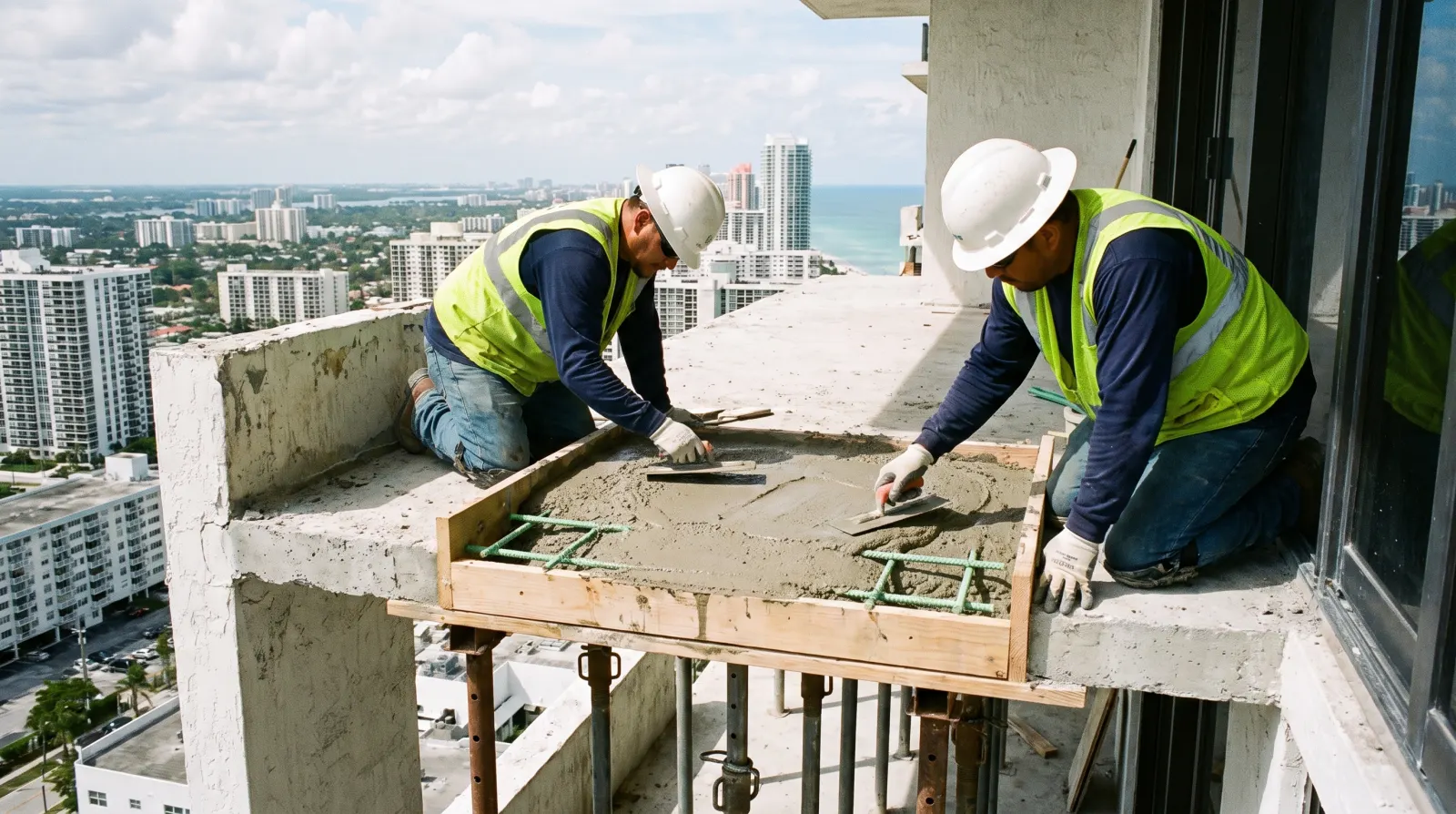 Balconies & Railings
Slab edges rebuilt, surfaces waterproofed, railings replaced and anchored correctly.
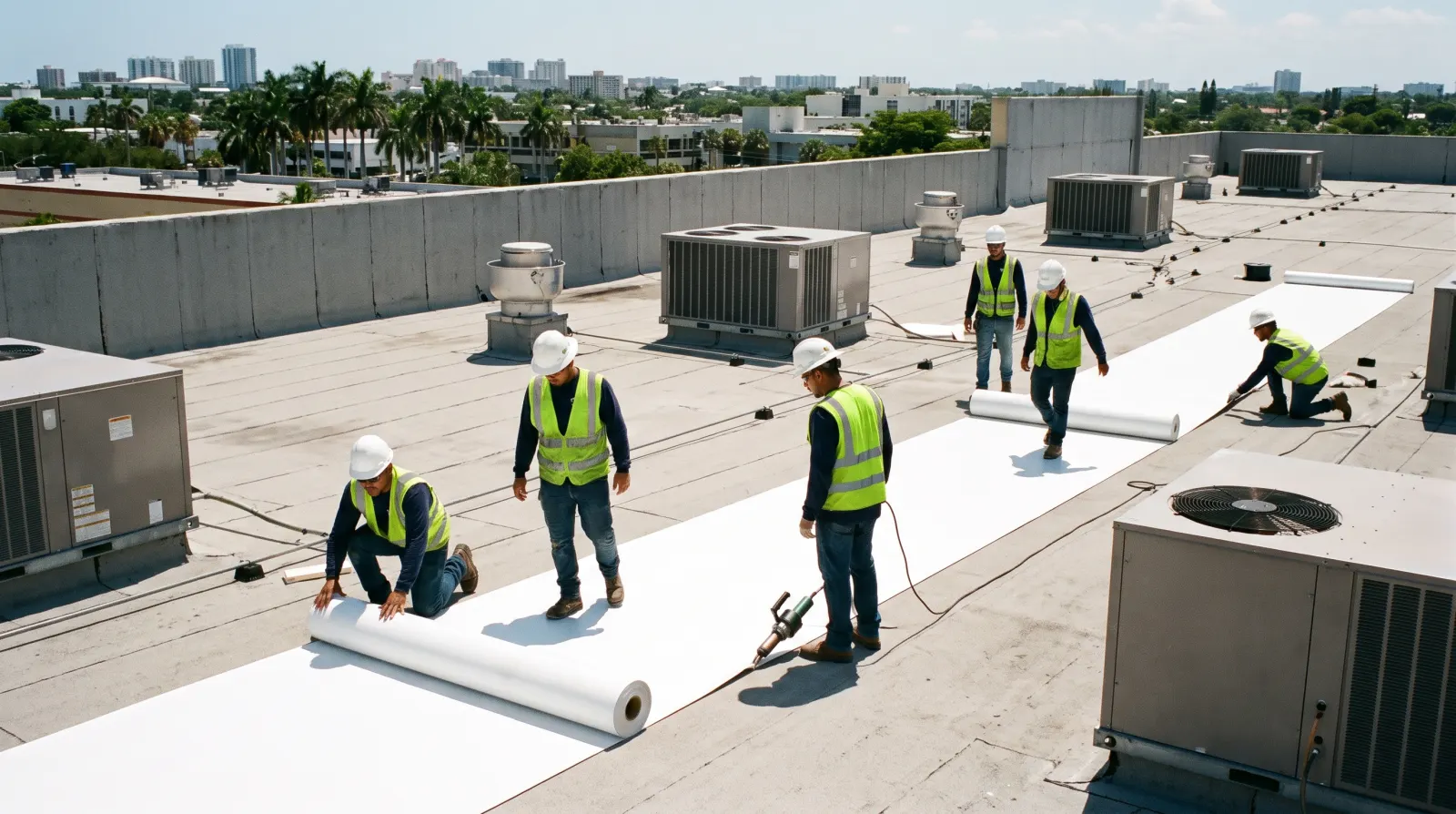 Commercial Roofing
Low-slope roofs repaired, restored or replaced to the consultant's specification, with the concrete deck fixed first.
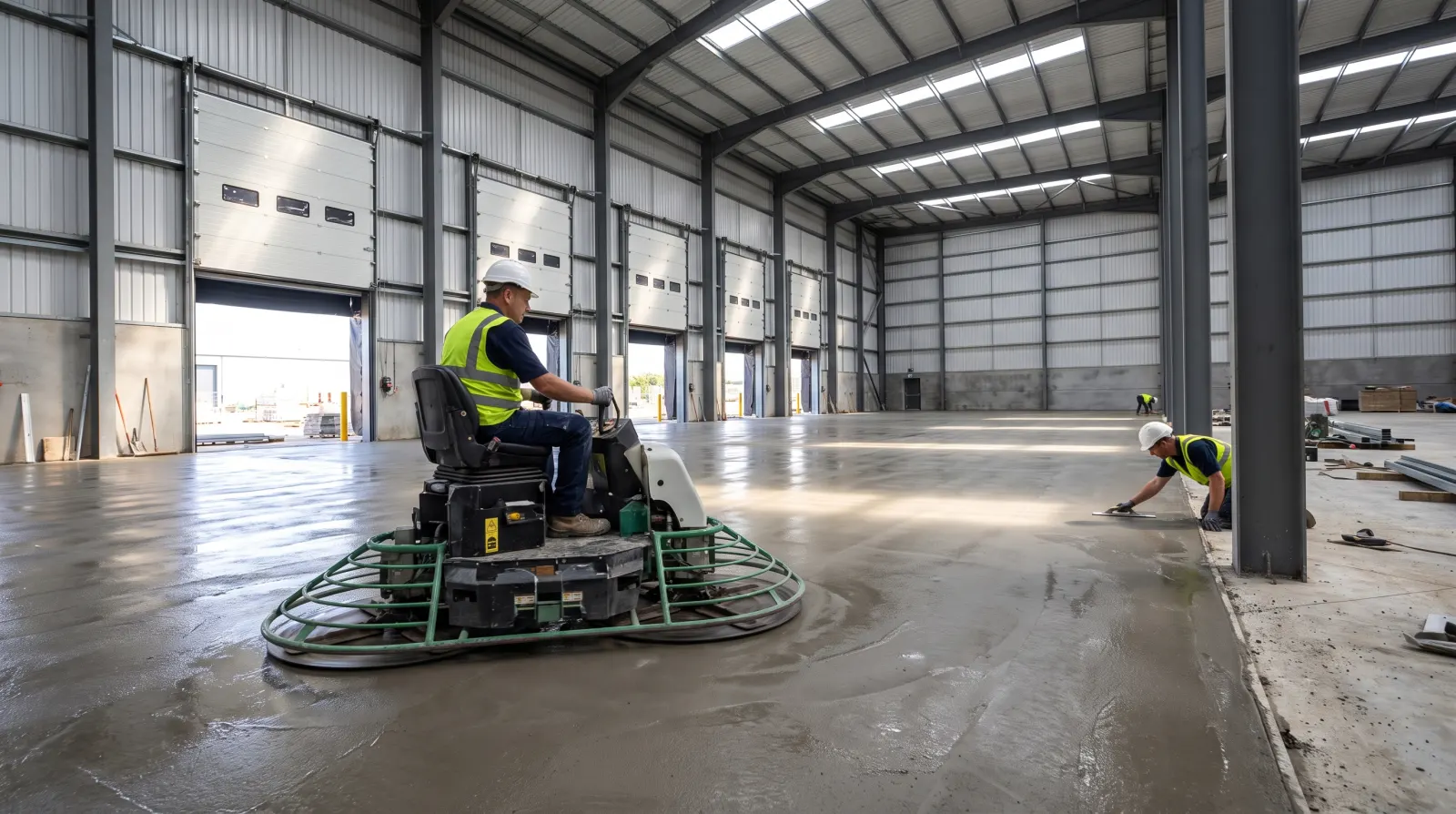 Industrial Floors
Slabs placed flat, joints that hold up to forklifts, finishes that last.
Referred by an engineer?
Have drawings, specifications or a full set of bid documents?
Most of our restoration, pool and roofing work comes to us through structural engineers, property engineers and board members. When the scope is already drawn and specified, we price exactly what is on the documents, flag anything that needs a question, and show every line so the board can compare bids fairly.
Request an estimate
Let's look at your building.
Send us the engineer's report, a few photos or a short description. We will schedule a site visit and follow up with a written scope.
- 45 years in the business
- Broward and Palm Beach counties
- Reply within one business day
Prefer to talk?(561) 678-4182
We reply within one business day. Your details are only used to respond to this request.