Commercial Pools
Commercial Pools & Pool Decks
Pool shells, decks and elevated pool structures restored and resurfaced.
In short
What is commercial pools?
Restoration of commercial pools covers repair of the concrete shell, a new interior finish, replacement of tile, coping and joints, and repair of the surrounding deck. A community, hotel or club pool needs this work when the finish turns rough or stained, hollow spots appear, water loss exceeds evaporation, the deck cracks or lifts, or leaks show below an elevated pool.
Commercial Pools & Decks
A community pool is the amenity owners notice first. We repair and resurface commercial pool shells, rebuild and waterproof pool decks, and restore the structure beneath elevated pools, where a leak becomes a structural problem.
Unified GCS has spent 45 years in this business. We carry out commercial pools projects across Broward and Palm Beach counties for condominium associations, property managers, commercial owners and industrial operators.
Written and reviewed by the Unified GCS project team, 45 years in concrete restoration and construction. Last reviewed October 2026.
Why it happens
Why pool shells and decks break down
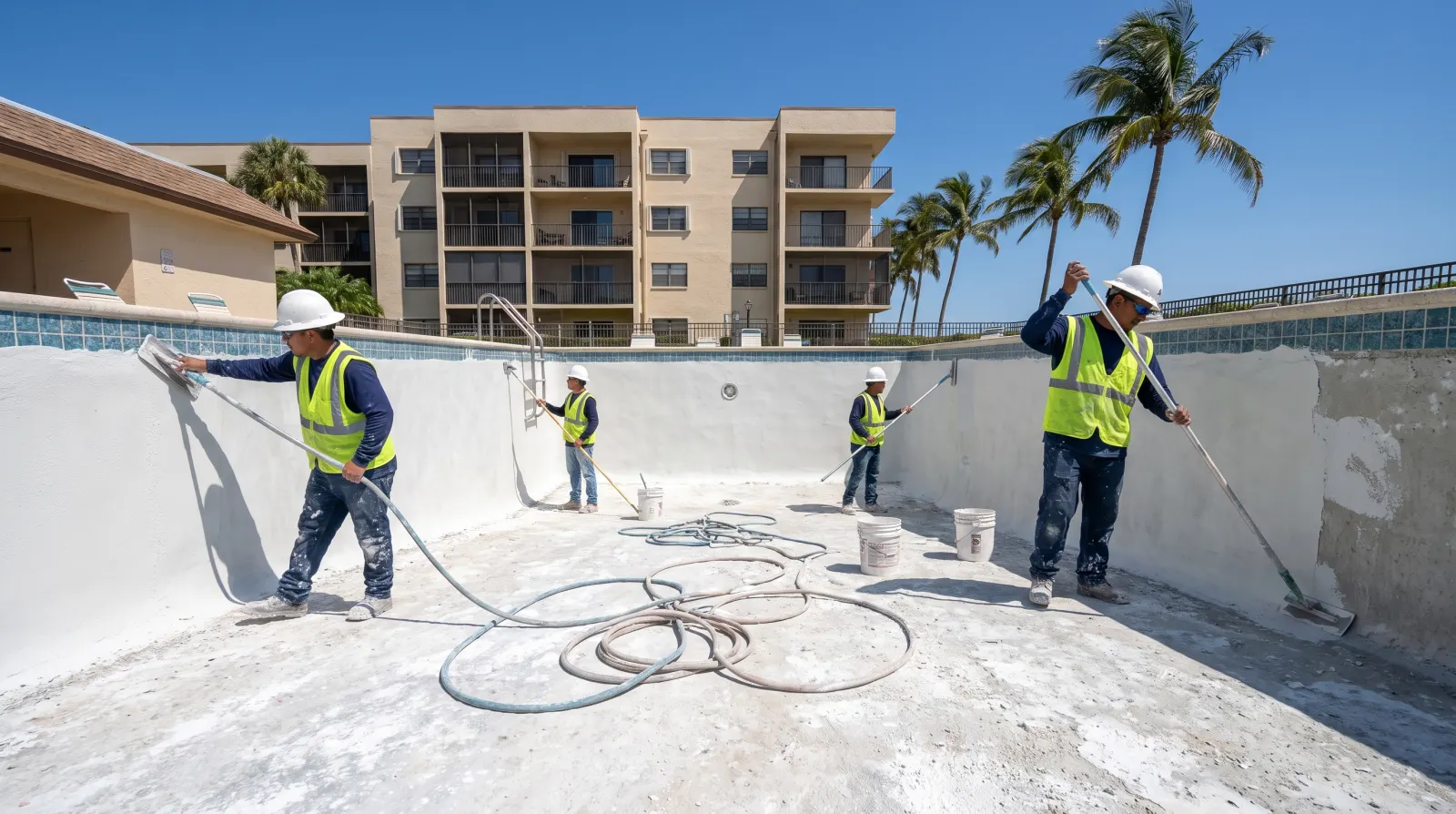
A pool shell is a reinforced concrete vessel that stays full of chemically treated water. The interior finish is the wearing layer, and it erodes over time: water chemistry that drifts out of balance etches the surface, exposes aggregate and roughens it. When a pool is drained, areas of finish that have lost their bond show up as hollow spots. Cracks in the shell or failed fittings let water out, and that water goes into the soil or the structure.
Decks suffer from sun, salt, splash-out and constant foot traffic. The joint between coping and deck is meant to move, and when its sealant fails, water gets under the slab and behind the tile line. On an elevated pool the shell and deck sit over a garage or occupied space, so a leak wets structural slabs and beams that carry a very heavy load. Corrosion there is a structural concern, not a cosmetic one.
What is included
Commercial Pools: scope of work
- 01Commercial pool shell repair and resurfacing
- 02Tile, coping and expansion joint replacement
- 03Pool deck repair, overlays, pavers and coatings
- 04Elevated pool deck structural repair and waterproofing
- 05Planters, fountains and amenity deck restoration
- 06Drainage and slope correction
How we do it
How a pool shell and deck are restored
The pool is drained in a controlled way, with the groundwater condition considered first, because an empty shell in a high water table can lift. Hydrostatic relief is opened where the pool has it. The old finish is sounded, and delaminated material is removed, or the whole surface is stripped or mechanically prepared, depending on its condition. Cracks, fittings, light niches and returns are examined, and any structural repair to the shell is made to the engineer's detail.
A bond coat is applied to the prepared shell before the new interior finish is troweled on, and tile and coping are reset or replaced as needed. The finish is applied in one continuous operation to avoid a cold joint. Filling starts as soon as the finish manufacturer allows and continues without stopping, so no ring forms on the wall. Start-up water chemistry is managed carefully through the first weeks, since the new surface is still curing under water.
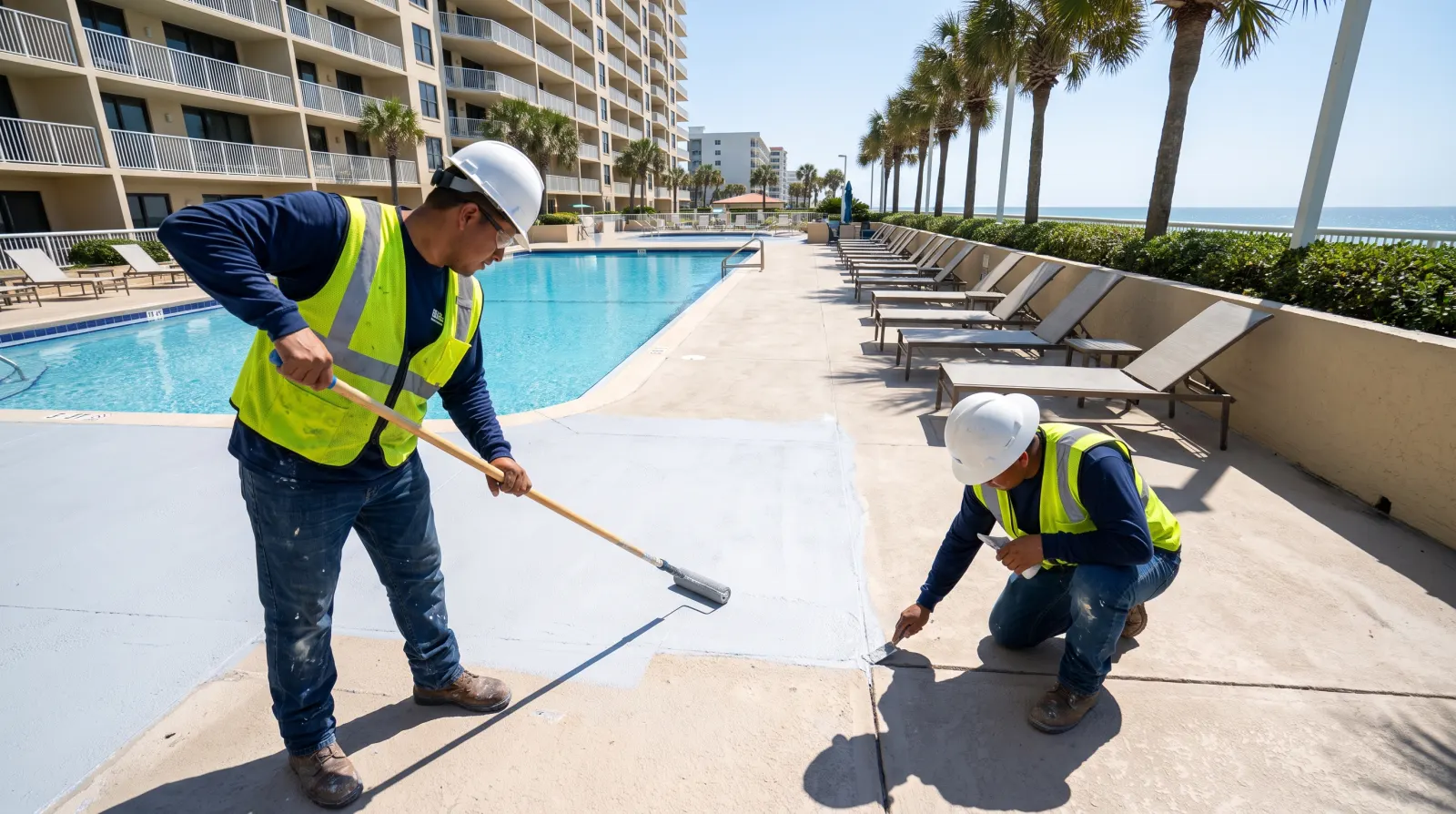
Deck work runs alongside. Damaged concrete is repaired, slope is corrected so water runs to the drains, and the perimeter joint at the coping is rebuilt with backer rod and sealant. The surface is finished with a slip-resistant coating, overlay or pavers. Over occupied space, the deck receives a membrane and is flood tested before finishes go down. Public pools are regulated, so any change to the pool itself is coordinated with the permits and approvals that apply.
Materials and systems
Pool finishes, deck surfaces and membranes: how each is selected
Interior pool finishes are cement-based and differ mainly in their aggregate. Traditional white plaster, a blend of white cement and marble dust, gives the smoothest surface and is the most sensitive to water chemistry. Quartz finishes add harder, colored aggregate for better wear and stain resistance. Exposed pebble finishes are the most durable and the most textured. Waterline tile and coping are set with mortars and grouts rated for continuous immersion, and the movement joint behind the coping takes a flexible sealant made for pool decks.
Pool deck surfaces are chosen for slip resistance when wet, heat underfoot and tolerance of pool chemicals. Options include acrylic-modified cementitious overlays, polymer deck coatings, and concrete or travertine pavers on a sand or pedestal setting bed. On an elevated pool deck, a membrane goes beneath whichever finish is chosen, commonly polyurethane, PMMA or hot-applied rubberized asphalt. Inside the shell, a cementitious or other immersion-rated membrane may be specified before the finish where the engineer wants added protection.
What makes it last
What makes a pool and deck restoration hold up
Pool finishes fail early when the bond to the shell is poor or the first weeks are mishandled. A lasting finish needs a shell prepared to a rough, clean profile, a bond coat applied as the manufacturer directs, and a start-up routine of brushing and careful chemical balancing while the cement cures under water. Draining is its own risk, since ground water can float an empty shell. On decks, the usual failures are a rigid joint at the coping and coatings applied over damp or contaminated concrete.
Owners of commercial pools should expect a proposal that separates shell repairs found after draining from the base resurfacing scope, because the true condition is visible only once the pool is empty. Ask who handles permits and any approvals the regulating agencies require, what the start-up procedure is and who performs it, and how long the deck membrane will be flood tested. Keep the start-up record and water chemistry logs, since manufacturer warranties on pool finishes commonly depend on documented water balance.
How a project runs
Planned around the people who use the building.
- 01
Walk the property
We start on site with your manager, board or engineer and look at the conditions first-hand.
- 02
Define the scope
You get a written scope tied to the engineer's report or our findings, with the phasing spelled out.
- 03
Plan access and safety
Swing stages, shoring, barricades, parking and resident notices are set before the first cut.
- 04
Do the work
Our crews carry out the repairs in sequence, with inspections at the points the engineer requires.
- 05
Close it out
Final inspections, permit closure and a record of what was done, for the association's files.
Summary
Commercial Pools: key takeaways
- 01
Plaster, quartz and pebble pool finishes differ mainly in aggregate hardness, texture and sensitivity to water chemistry.
- 02
An empty pool shell can lift in a high water table, so draining is planned around ground water conditions and hydrostatic relief.
- 03
The joint between pool coping and deck must stay flexible, because a rigid joint cracks tile and lets water under the slab.
- 04
Elevated pool decks need a membrane under the walking surface and a flood test before finishes go down.
Glossary
Terms you will see in the engineer's report
- Coping
- The cap of stone, precast or poured concrete that finishes the top edge of the pool wall and meets the deck.
- Hydrostatic relief valve
- A fitting in the pool floor that lets ground water into an empty shell, relieving upward pressure that could lift or crack it.
- Bond beam
- The thickened, reinforced top section of a pool wall that supports the tile and coping. Cracks in the bond beam often follow a failed deck joint.
- Gunite
- Concrete sprayed at high velocity onto a reinforcing cage to form a pool shell, placed against a single form or the excavated soil.
- Start-up
- The first weeks after a new finish is filled, when the surface is brushed and water chemistry is adjusted while the cement cures.
Questions
Commercial Pools: common questions
How long is the pool closed during resurfacing?
It depends on the size of the pool and what the shell needs once it is drained and inspected. We give the association a schedule before the pool is closed and plan the work around season where we can.
How do we know if our pool is leaking or just evaporating?
A simple bucket test compares water loss in the pool with loss from a bucket of pool water set on a step over the same period. If the pool drops noticeably more, water is escaping. Pressure testing the plumbing and dye testing at cracks and fittings then narrow down where, before any repair is planned.
Can a pool deck be resurfaced without replacing the concrete?
Often, yes. If the slab is structurally sound, cracks and spalls can be repaired and the surface covered with a bonded overlay or coating that restores texture and slip resistance. If the slab has settled, heaved or lost its slope to drain, sections are usually removed and repoured before any new finish is applied.
How often does a commercial pool need to be resurfaced?
There is no fixed interval. Finish life depends on the material, how consistently the water chemistry has been kept in balance, and how heavily the pool is used. Roughness that snags swimwear, staining that will not clean off and hollow areas found when the pool is drained are the practical signs that a new finish is due.
What is different about repairing an elevated pool?
An elevated pool sits on a structural slab over a garage or occupied space instead of on the ground. Leaks wet beams and slabs that carry the weight of the water, so the engineer evaluates the structure beneath as well as the shell. Repairs usually combine concrete repair from below, a membrane system and careful detailing at drains and penetrations.
Can residents stay in the building during restoration?
In most projects, yes. Work is phased by elevation or stack, balconies are closed only while they are under repair, and notices go out before anything affects residents. We agree the sequence and access plan with the board and manager before work starts.
Do you work with our engineer?
Yes. Structural repairs are built to the specification of your engineer of record, and we coordinate inspections with them throughout the job. If you do not have an engineer yet, we can help you get started.
Standards and references
- International Concrete Repair Institute (ICRI): concrete repair guidelines
- American Concrete Institute (ACI): codes and guides for concrete construction and repair
- Florida Building Code
Repair methods and materials on every project follow the engineer's specification, the manufacturer's requirements and the building code in force. This page is general information, not engineering advice.
Related services
 Structural Concrete
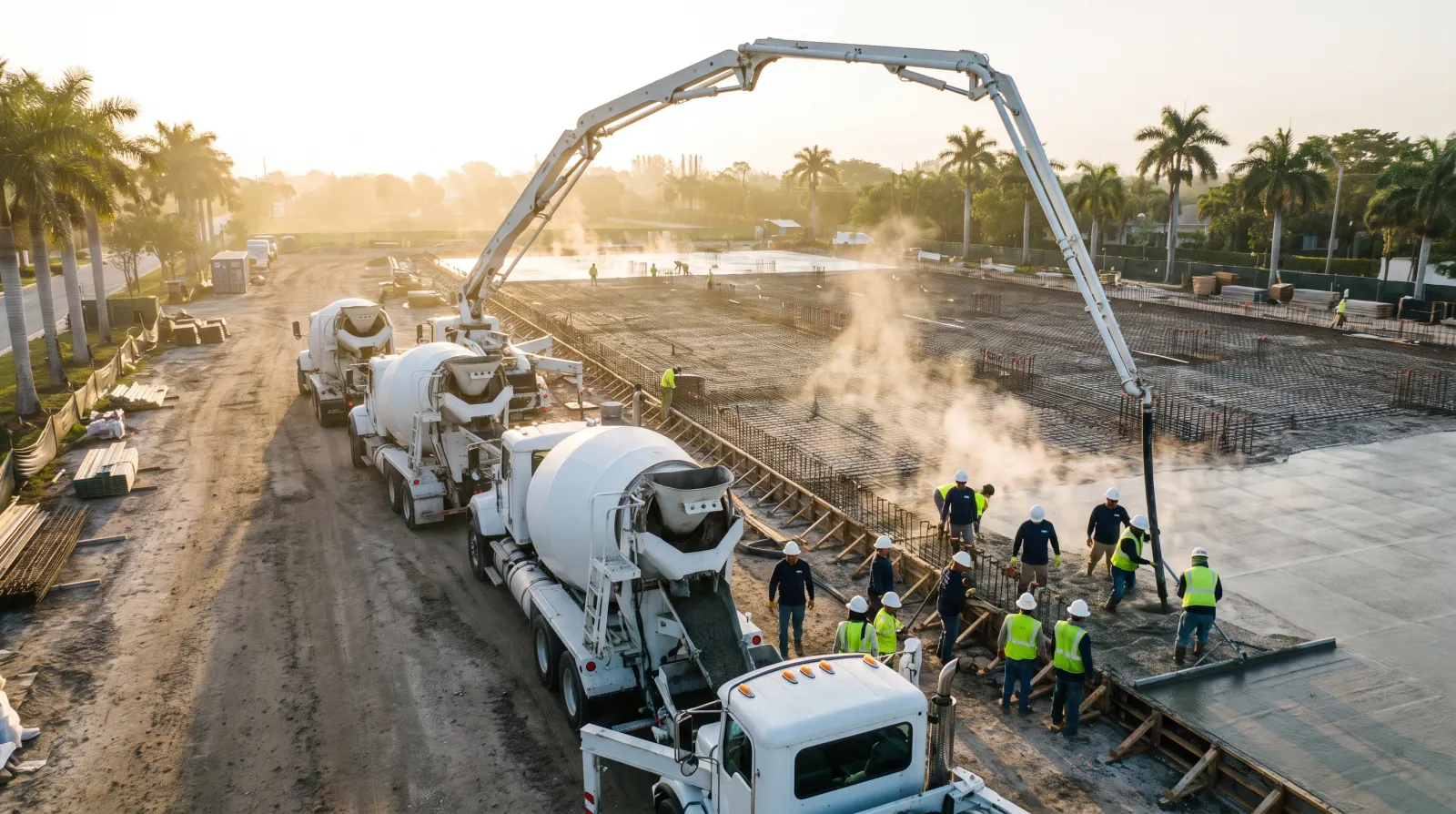
Foundations, slabs and structural pours for new construction and additions.
 General Contracting
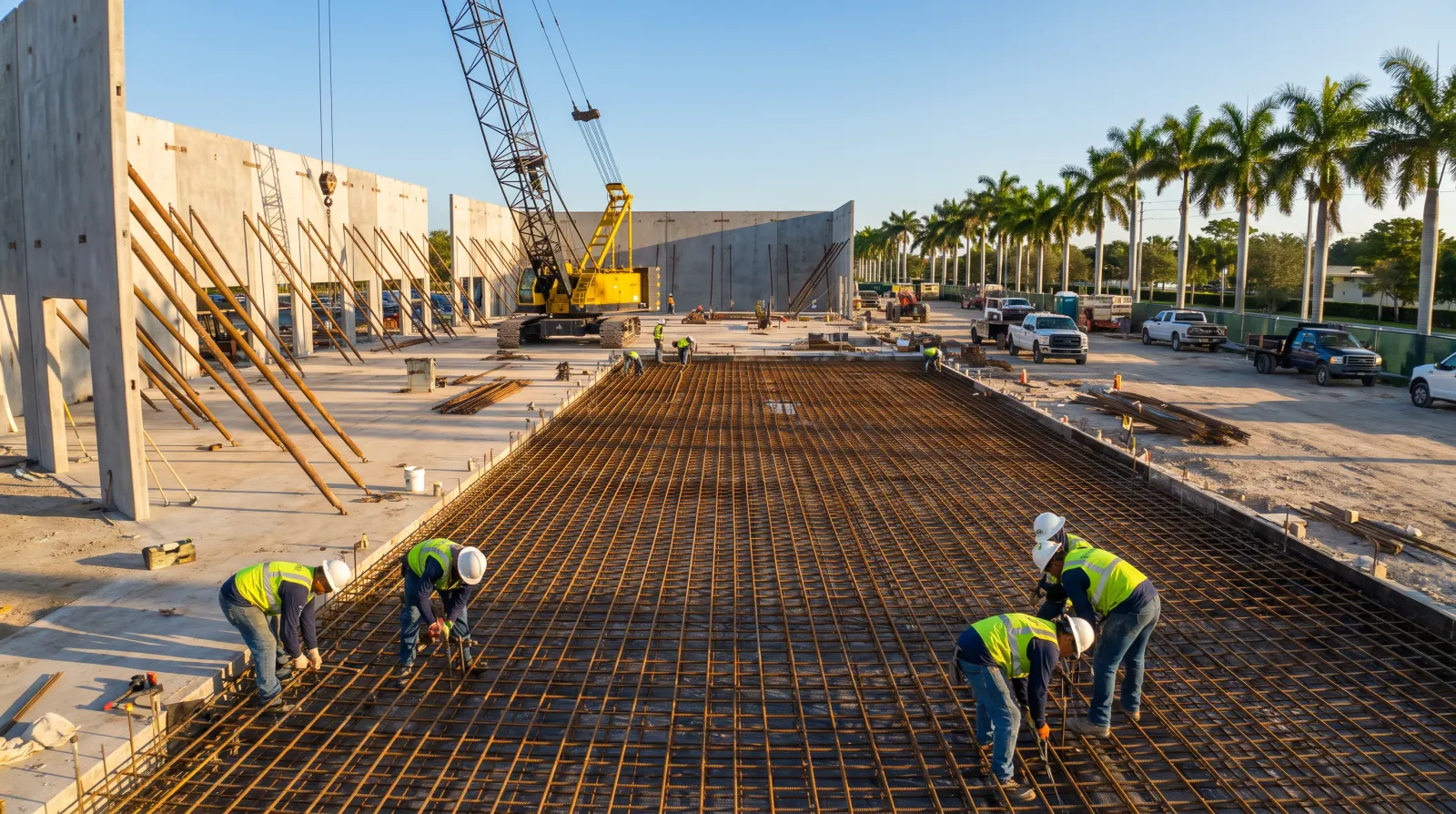
One contractor accountable for the schedule, the trades and the finished building.
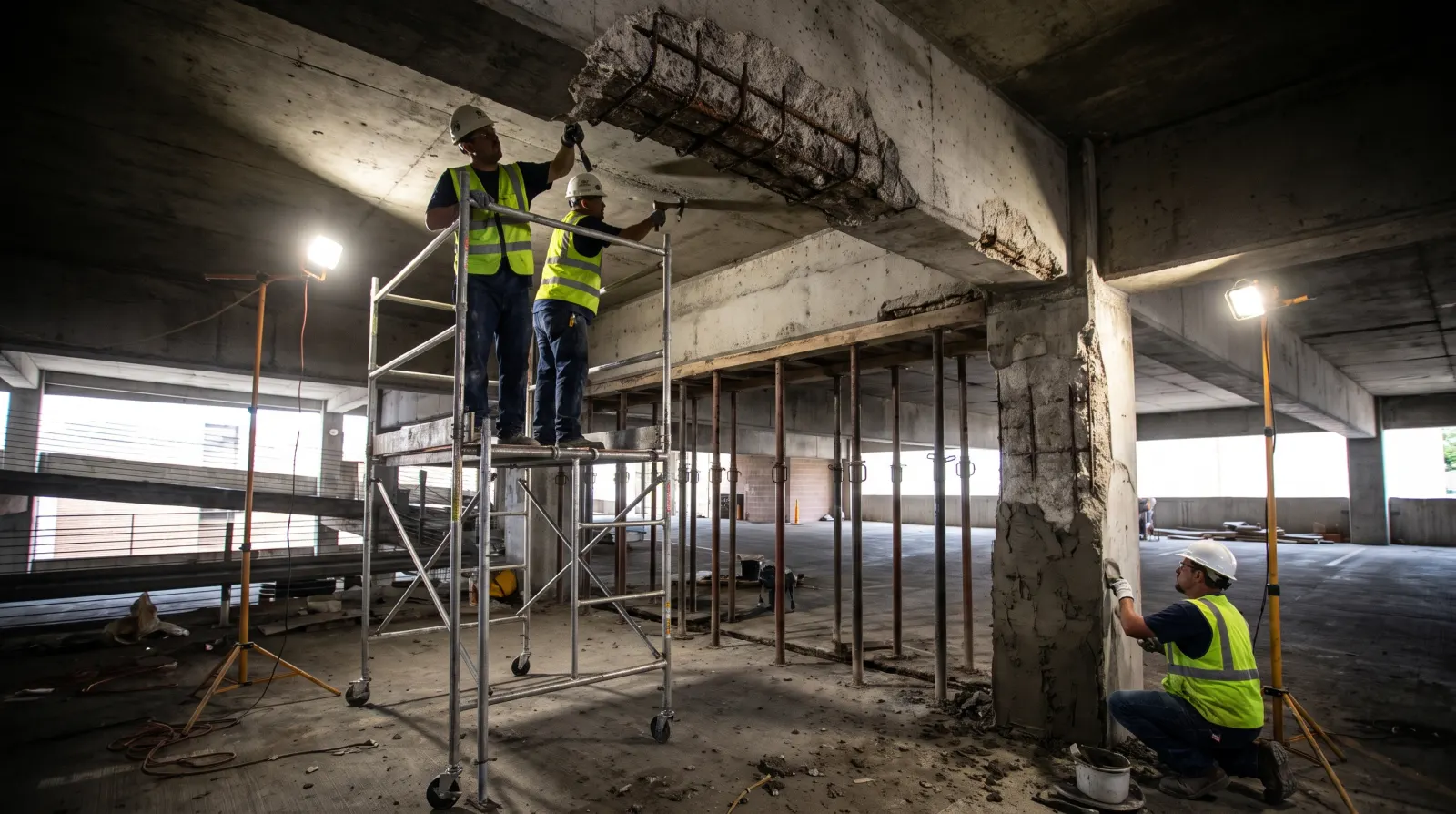 Parking Garages & Plaza Decks
Structural repair and traffic coatings for decks that carry cars, people and water.
Referred by an engineer?
Have drawings, specifications or a full set of bid documents?
Most of our restoration, pool and roofing work comes to us through structural engineers, property engineers and board members. When the scope is already drawn and specified, we price exactly what is on the documents, flag anything that needs a question, and show every line so the board can compare bids fairly.
Request an estimate
Let's look at your building.
Send us the engineer's report, a few photos or a short description. We will schedule a site visit and follow up with a written scope.
- 45 years in the business
- Broward and Palm Beach counties
- Reply within one business day
Prefer to talk?(561) 678-4182
We reply within one business day. Your details are only used to respond to this request.